
{{product.title}}
Plastic shelving
Plastic shelving consists of modular storage systems made from corrosion-resistant plastic, designed for hygienic environments such as the hospitality, healthcare and food industries. They are used in situations where moisture resistance, ease of cleaning and reliability are essential.
 The alternative to metal or wooden storage systems No risk to food safety whatsoever Temperature: -40°C to +40°C (up to +80°C for short-term use during cleaning)
What are plastic shelving units and what are they used for?
Plastic shelving units are modular storage systems made entirely from corrosion-resistant plastic. They are widely used in environments where hygiene, moisture resistance and ease of cleaning are important.
As plastic does not rust and is easy to clean, plastic shelving is particularly suitable for areas where food is handled or where strict hygiene requirements apply. Furthermore, the systems are modular in design, making them easy to expand or adapt to changing storage needs.
Plastic shelving is also often referred to as plastic racks, plastic shelving units or a plastic shelving unit, depending on the application and context.
{{SelectedGroup.name}}
{{product.groupName}}
{{product.title}}
Our products
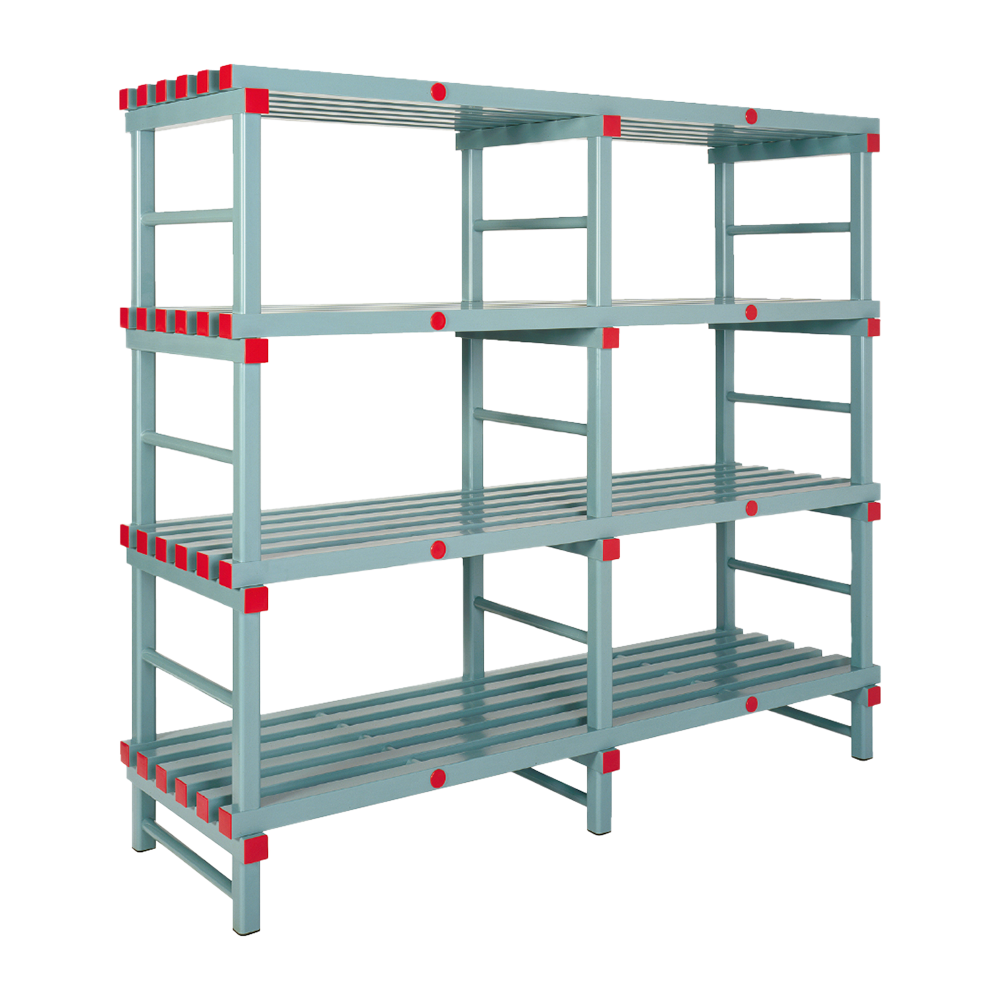
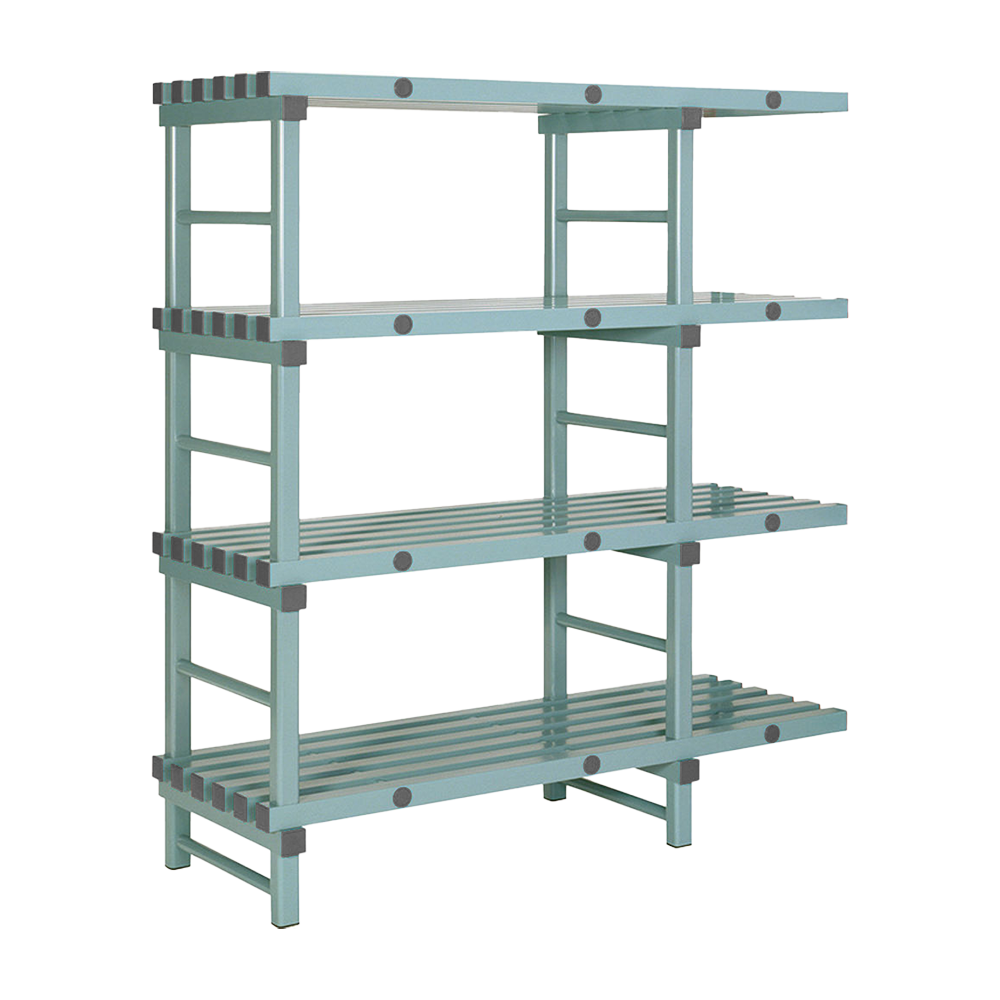
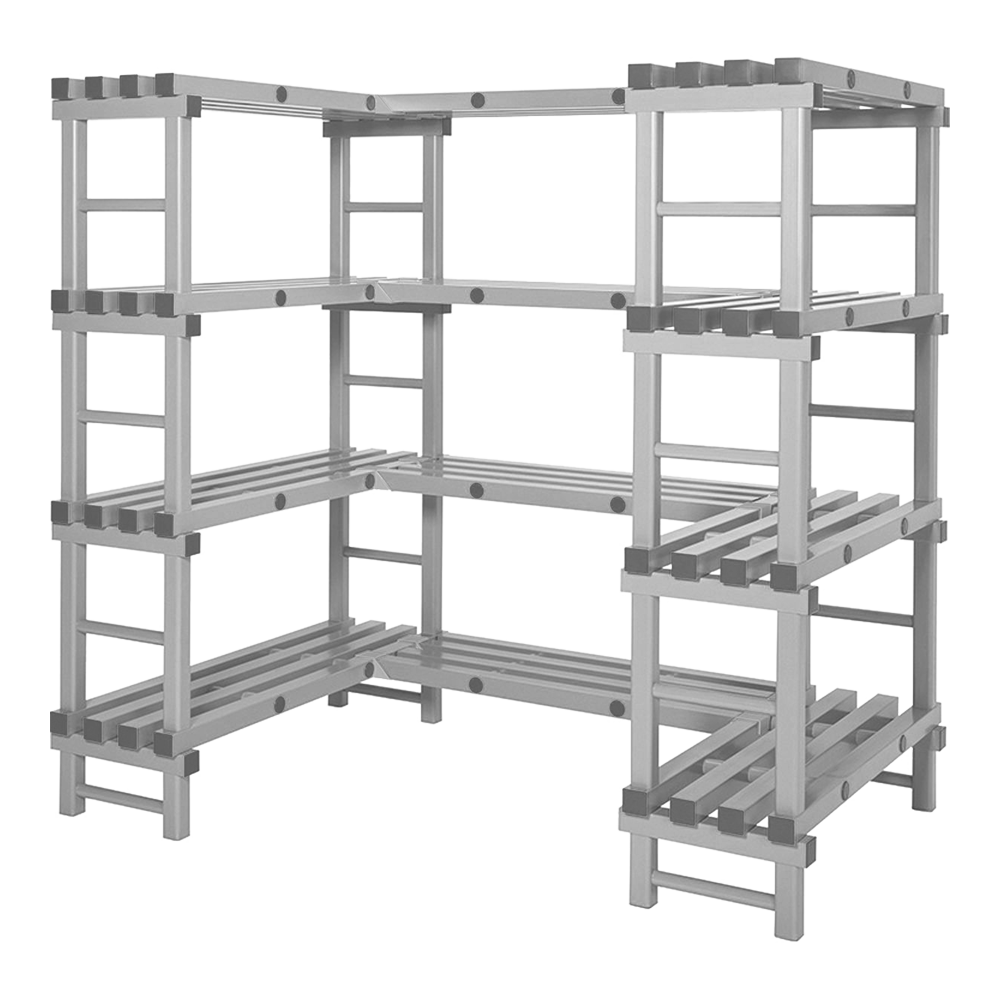
The REA range includes plastic shelving units available in various designs and colours. This allows storage systems to be tailored to the specific application and the environment in which they are used.


Applications of plastic racking
Plastic racking is used across a wide range of sectors. The choice of this type of racking depends largely on the environment and the requirements it must meet.

Catering and professional kitchens
Plastic racks are used in kitchens and catering establishments because of their hygienic properties and ease of cleaning.

Healthcare facilities
Hygiene plays a key role in hospitals and healthcare facilities. Plastic shelving units help to keep storage areas clean and tidy.

Laboratories
Plastic shelving is used in laboratories because of its resistance to moisture and cleaning products.

Food industry
The food industry is subject to strict hygiene requirements. Plastic racking is suitable for applications where work is carried out in accordance with HACCP guidelines.

Cold stores and freezer rooms
Plastic shelving remains functional at low temperatures and is therefore suitable for use in cold stores and freezer rooms.

Warehouses with high humidity
In environments with high humidity, plastic racking offers a solution where metal systems are susceptible to corrosion.
The clean choice: REA’s plastic racking
REA’s plastic racking is used in environments where hygiene and reliability are paramount. The systems meet the requirements set out in sectors such as food processing, healthcare and logistics.
How much weight can a plastic shelving unit support?
The load-bearing capacity of plastic shelving units depends on the type of system and the specific design. Key factors here are the load per shelf and the total load on the shelving unit.
To ensure safe use, it is important to follow the system’s specifications and distribute the load evenly.
Super simple and no tools required
Can be assembled by one person
A REA plastic shelving unit is easy for one person to put together. In fact, it’s a piece of cake, as no tools are required. Thanks to the mechanical connections, no screws or bolts are needed, which makes installation even easier.
Plastic shelving is easy to clean
A key advantage of plastic shelving is its ease of maintenance. The surfaces are smooth and do not absorb moisture, which means dirt is less likely to stick.
They can be cleaned using water and standard cleaning products. This makes plastic shelving suitable for applications where hygiene is important.
Want to know more? Find out here how to clean plastic shelving quickly and effectively.

Shelving suitable for both cold and hot conditions
Plastic shelving can withstand temperatures ranging from -40°C to +40°C (continuous use) and, for short-term use during cleaning, temperatures ranging from -40°C to +80°C. This makes it suitable for both refrigerated and warm environments.
Furthermore, there is no flaking and no transfer of odours or flavours occurs. This makes plastic shelving suitable for applications where food safety is a consideration.
Read more about flaking and the transfer of odours or flavours in the knowledge base:
- Does plastic flake?
- Does it cause the transfer of odours or flavours?

HYGIENIC
REA's plastic storage systems are designed in accordance with HACCP guidelines to prevent the growth of mould and bacteria.

CORROSION-FREE
REA products are completely resistant to moisture and temperature fluctuations.

ROCK SOLID
The unique design prevents wear and tear and makes the racks practically indestructible.

EXCEPTIONAL LOAD-BEARING CAPACITY
REA racks can easily handle loads of 200 kg per linear metre.

MODULAR
REA racks can be assembled and expanded in a modular system without the need for any special tools.

EXTREME TEMPERATURES
The products can be used in spaces at temperatures ranging from -40 to +80 degrees, without any loss of quality.

100% RECYCLABLE
During production, residual waste is kept to a minimum and the plastic racks are 100% recyclable.
Tried-and-tested quality
Plastic racking with an exceptionally long service life
Plastic racking is renowned for its long service life. As the material does not rust and requires little maintenance, the systems remain in service for a long time. The service life is influenced by factors such as load, usage and the environment.
Read more about the service life of plastic racking here.
Load-bearing capacity of plastic racking
The load-bearing capacity of plastic racking depends on the design and type of system. For every application, it is important to consider the maximum load per level.
See also the article on the load-bearing capacity of plastic racking for specific applications.
Sustainable and 100% recyclable
Plastic shelving is fully recyclable. This makes it a sustainable choice for storage solutions.
Request a no-obligation quote
You’ll hear back from us within 48 hours!
What is the difference between plastic shelving and metal shelving?
Plastic shelving and metal shelving are both used in storage environments, but differ significantly in their properties.
Plastic shelving is resistant to moisture and does not rust. Metal shelving can be stronger under very heavy loads, but is more susceptible to corrosion. Furthermore, plastic shelving is easier to clean and is therefore more suitable for hygienic environments.
Read more about the difference between plastic and metal shelving in the in-depth article.

Plastic shelving unit with castors
If you already own a REA shelving unit and would like to make it mobile, the castors can also be fitted to it at a later date. Below are the step-by-step instructions for fitting the castors. It is, of course, easier to order your shelving unit with castors fitted from the outset. The castors will then already have been fitted at our factory.
Various wheel sets are available, including:
- Stainless steel/nylon
- Plastic/rubber

Step-by-step guide to fitting wheels
1. Remove the round cap and the outer sleeve from the protruding leg
Use a screwdriver for this, and preferably a rubber mallet. Place the screwdriver in the centre of the round cap and tap gently to create a gap.
Then pry the cap loose. Next, place the screwdriver on the edge of the sleeve and tap it loose until it can be removed completely.
2. Remove the legs from the shelf
Once the sleeves have been removed, you can simply pull the legs out of the shelf.
3. Fit the new legs with wheels
First, slide the supplied legs with wheels into the holes in the crossbars that have now been freed up. Then slide them through into the holes in the shelf, in exactly the same way as the previous legs were fitted.
4. Fit the new sleeves and the round cap
Use the rubber mallet to tap the new sleeves firmly down over the legs. Finally, place the new round cap on the end and tap it into place.
Over 60 years’ experience
The leading specialist in plastic racking
REA specialises in plastic storage systems and helps you select the right solution for every application.
The key benefits at a glance:
- resistant to moisture build-up and corrosion, even in corners and seams
- easy to clean
- suitable for hygienic applications
- modular and expandable
- long service life
- suitable for extreme temperatures
- always a colour to suit your needs: available in classic, design and grey
INTERESTED IN THE BEST SOLUTION?
NO-OBLIGATION QUOTE
Ultra-robust plastic storage systems
Ideal for hygienic applications
Customisable
Easy to clean
Find out all about plastic shelving and racks
Blog articles

Are mobile shelving units HACCP-compliant?
Mobile and food-safe? This is how shelving units help improve hygiene.

The importance of smooth surfaces
Prevent dirt build-up: discover the importance of truly smooth surfaces.

Can a plastic rack be used in a freezer room?
Using a plastic rack in a freezer room? Here’s what you need to know.
Veelgestelde vragen
We manufacture our plastic shelving units from PVC.
Yes, plastic shelving units are ideal for use in cold stores and freezer rooms. They can withstand temperatures ranging from -40°C to +40°C without cracking, warping or losing quality.
For short-term use, the shelving units can even withstand temperatures of up to +80°C.
Yes, it’s actually very easy. Plastic is lighter than metal or wood, so shelving units can easily be moved by one or two people.
REA’s plastic shelving requires little maintenance and is very easy to clean using a damp cloth and a mild cleaning product.
Plastic shelving can last a lifetime. This depends on various factors, such as maintenance, exceeding the weight limit, etc.
At REA, we offer a range of shelving units. It is possible to add various options, such as castors, adjustable feet, spacers and more. If you would like to know the exact options available, please check the details for the product you are interested in. View all our shelving units here.
Yes. Plastic shelving units are fully recyclable.
Plastic shelving units are usually supplied as a modular system and are easy to assemble.
Plastic shelving does not rust, is easier to clean and is better suited to damp and hygienic environments. Metal shelving is often stronger when subjected to very heavy loads, but requires more maintenance.
Read more here about the difference between plastic and metal shelving.
Yes. Plastic shelving units are widely used in the catering and food industries because they are easy to clean and resistant to moisture.
Yes. Thanks to their modular design, plastic shelving units can be easily extended or adapted.
See here how easy it is to extend a plastic shelving unit.
Plastic shelving units are resistant to moisture and commonly used cleaning products. This makes them suitable for environments where cleaning takes place regularly.
This depends on the type and model. Please refer to the product specifications.
Yes, under normal use. For specific applications, always refer to the technical specifications.
Yes. REA provides support in determining the correct layout and use of plastic racking.